How public sentiment shapes
the SONA

The annual presidential address typically skews positive in tone. Public satisfaction with the president appears to have some influence.
July 27, 2026

Every year, the public is asked what they want to hear from the president on their State of the Nation Address (SONA). But does it even matter and does the speech get influenced by the public's view?

It appears so, to an extent. A Data Dictionary analysis of SONA speeches revealed that public satisfaction with the president tends to influence the sentiment evoked by the SONA.

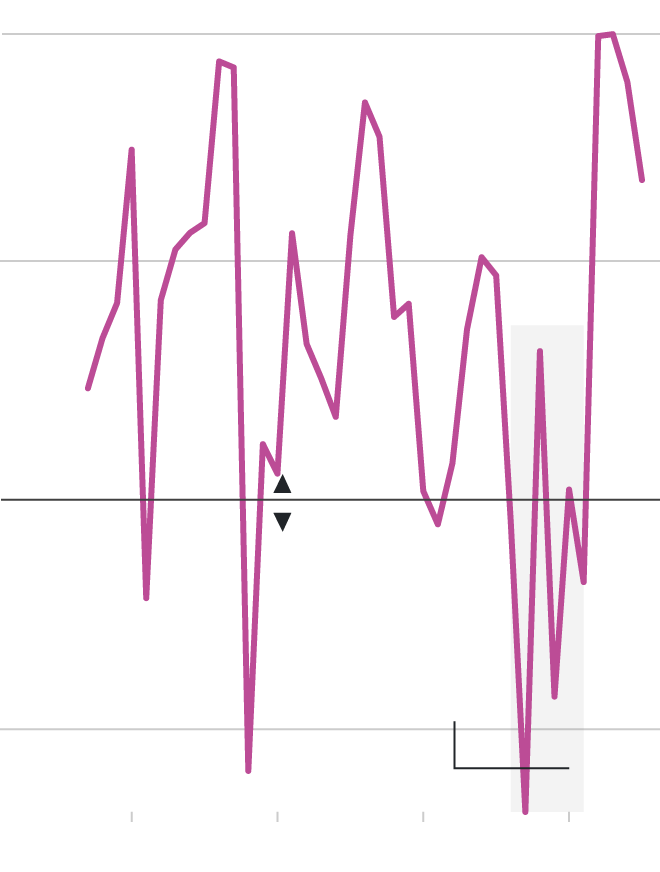
In this chart, a reading above zero in the y-axis indicated a generally positive sentiment of the SONA, which means the speech is largely that of approval, optimism and encouragement. A reading below zero is the opposite of that.

Meanwhile, the x-axis plots the net satisfaction rating of the president before the SONA was delivered, sometimes in June or July. The data came from the Social Weather Stations, an independent pollster.

We found that a lower net satisfaction rating immediately before the SONA tends to prompt a more positive tone in the president's speech. The relationship seems to indicate how the SONA is not only used by the president to set their policy agenda, but as a political tool to win the public's trust and confidence.

Whether or not this is an effective strategy, however, is still up to question.

The relationship between the sentiment evoked by the speech and satisfaction ratings taken months after the speech was delivered, still showed the same inverse relationship.
For scholars, the SONA is not only a policy speech but has long been a political messaging tool meant to strengthen or stabilize a president's popularity or, in the twilight years of their administration, salvage whatever remains of their political capital.
In a 2023 analysis of the same speeches, we reported how specific words found in the SONA help shape the message the president intends to deliver. For instance, Rodrigo Duterte used his SONA to insist on the legitimacy of his drug war and attacked critics of the policy. He and Gloria Arroyo also used the SONA to address crises facing the nation such as the Covid-19 pandemic and the severe acute respiratory syndrome (SARS) disease that spread during the Arroyo administration in the early 2000s.
The late Benigno Aquino III, meanwhile, used the SONA to differentiate himself from his predecessor, Arroyo, who suffered deteriorating satisfaction ratings in her waning years in Malacañang.
However, beyond the relevance of individual words in the SONA was the broader tone of the entire speech. Our current analysis has confirmed results of earlier studies that showed an almost universal understanding that the SONA tends to have a more positive than negative sentiment.
Unlike earlier research however, our analysis used a language model pre-trained to understand the context behind the Tagalog language, which English-based language models typically miss. This is vital for the SONA in particular because leaders like Aquino delivered his speeches in Filipino, while Duterte often code-switched between Filipino and English, a usual practice in the Philippines.
No model is perfect however. As it is, the model is designed to process a limited amount of text at any given time. This limitation, hence, required us to cut the SONA speeches into chunks for processing. "The limit for the amount of text that can be processed is somewhat low. But technically, the results are correct since it's very straightforward," said Aunhel John Aduptante, one of the model's creators at the Department of Science and Technology, when asked about his opinions about our methodology.

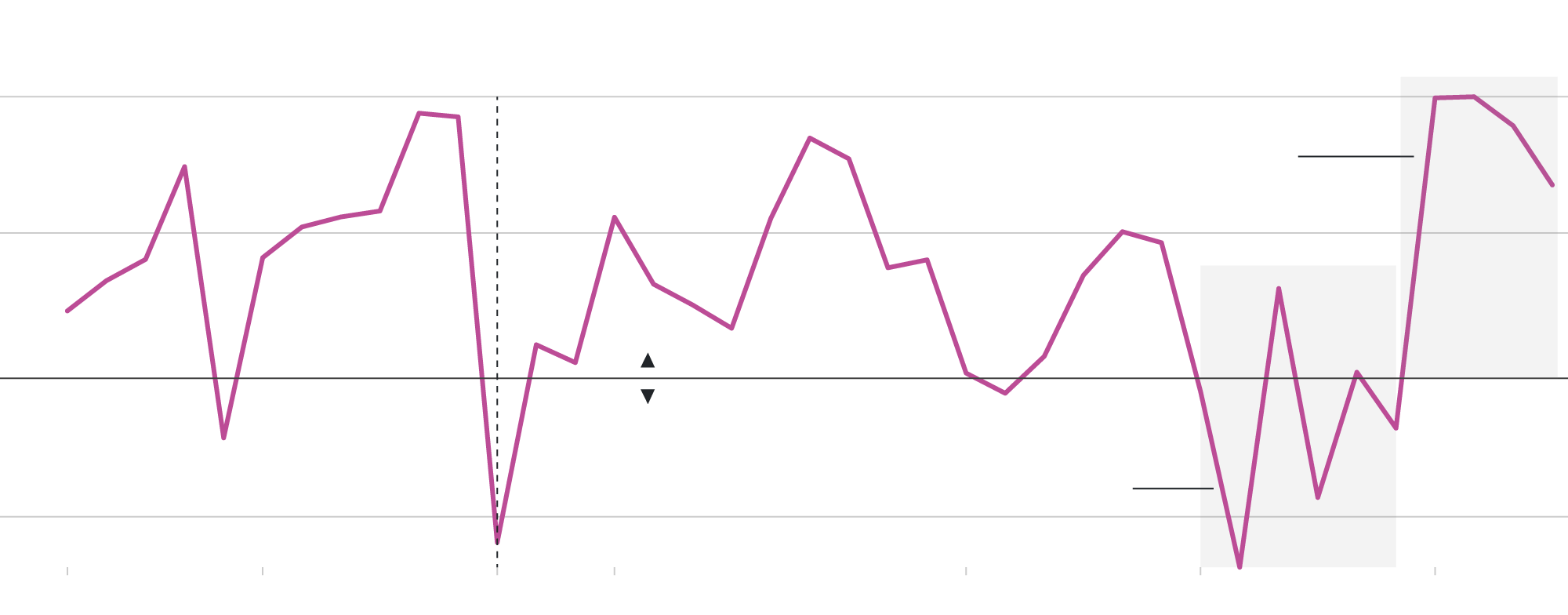
Marcos Jr.'s speeches evoke some of the most positive sentiment in SONA

Sentiment rating

Asian financial crisis

+1.0

...while Marcos Jr.’s had the most positive sentiment among presidents.

+0.5

Positive sentiment

Negative sentiment

Duterte’s speeches highly evoked

negative sentiment...

−0.5

1986

1992

1998

2001

2010

2016

2022

+1.0

+0.5

Positive

Negative

Negative sentiment

for Duterte speeches

−0.5

1990

2000

2010

2020

While most SONA did evoke a more positive sentiment, our analysis showed noticeable outliers. Foremost of which were Duterte's speeches, which had a high negative sentiment. Interestingly, the sentiment appeared to have made a complete U-turn when President Ferdinand “Bongbong” Marcos Jr. took over: his speeches appeared to have some of the most positive sentiment since 1986.
As expected as well, speeches tend to start at a relatively high positive sentiment early in the six-year term of each president, which conincidentally was when presidents typically enjoy the highest satisfaction ratings.
Marcos's penultimate SONA to be delivered today will determine if the trend will continue. Prinz Magtulis

Sources

gov.ph, Department of Science and Technology, Social Weather Stations

Copyright 2026 - The Data Dictionary Project